AReStMa – Assessment, Residual Strength and Strengthening of Masonry Structures
Our research investigates the effects of damage on masonry structures. We develop new mechanical and dynamic models for assessing the residual load-bearing capacity and stability of masonry structures damaged by past loading or other effects.
We investigate a range of structures and structural elements in order to identify the factors that have led to their current condition, including the initial damaging effects and their evolution over time. In addition, we aim to predict the future behaviour of structures based on their current condition. Based on the assessment of their condition and expected service life, we propose appropriate strengthening strategies, determine whether structures can remain in service, and, where necessary, recommend restrictions on their use.
The load-bearing capacity of damaged masonry vaults may be only a fraction of that of intact structures. Consequently, neglecting visible or suspected damage during structural assessment can lead to serious errors.
Our aim is to determine the load-bearing capacity of historically widespread vault types in both intact and variously damaged conditions. We analyse how different loading histories affect the development of cracks within the structures. The model we are developing will allow the failure load of vaults with arbitrary geometries to be determined, taking into account both existing and assumed damage. We are also developing a procedure for determining the load-bearing capacity associated with individual crack patterns and for designing appropriate strengthening measures.
The results of this research will provide significant support for professionals involved in the restoration and strengthening of historic buildings.
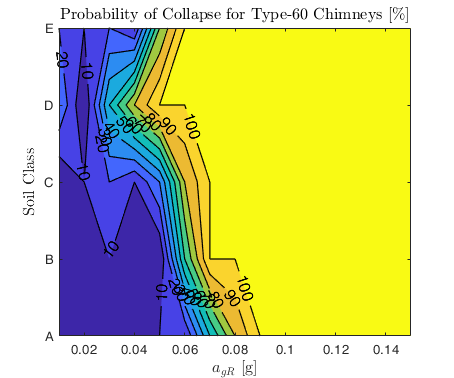
Rocking structures can lift off from the ground when subjected to seismic excitation. During the subsequent motion, they may overturn or eventually return to their original position. Determining the motion of such structures requires dynamic analysis. The aim of our research is to assess the seismic safety of rocking structures.
The results of this research may help explain how certain monolithic structures – such as minarets, church towers, slender wall remnants, chimneys, columns and statues – have survived past events, including earthquakes, bombings and building collapses. In addition, we aim to determine whether such structures require strengthening to withstand future hazards, or whether their stability can be demonstrated under the expected actions.
The results of this research will provide important data for establishing design principles and procedures for rocking structures.
Following the earthquake that struck Türkiye and Syria in February 2023, the head of the research team participated in the on-site assessment of earthquake damage in Antakya and Kahramanmaraş as a member of the BME engineering expert delegation. The team assisted local disaster management authorities in assessing the structural condition of damaged buildings. Numerous collapsed or severely damaged mid-rise residential buildings were investigated on site. These buildings had reinforced concrete frame structures with masonry infill walls.
In the seismic design of frame structures with masonry infill, calculations often consider only the reinforced concrete frame, neglecting the role of the infill walls. However, these walls not only play a significant role in load-bearing behaviour, but we hypothesise that their degradation during an earthquake and their detachment from the frame may also contribute to the progressive collapse of the entire building. This raises the question of whether, in certain cases, the presence of infill walls may contribute to building collapse. If this effect proves to be significant, the relevant standard design procedures may need to be revised. Based on the results, we may develop recommendations for more accurately accounting for the interaction between masonry infills and frame structures, as well as for the repair and rehabilitation of partially damaged structural elements.
In regions of high seismicity where this construction method is widespread, even minor modifications to current design approaches may improve the earthquake resilience of buildings.